He is the Object
Mixed Media, 2025
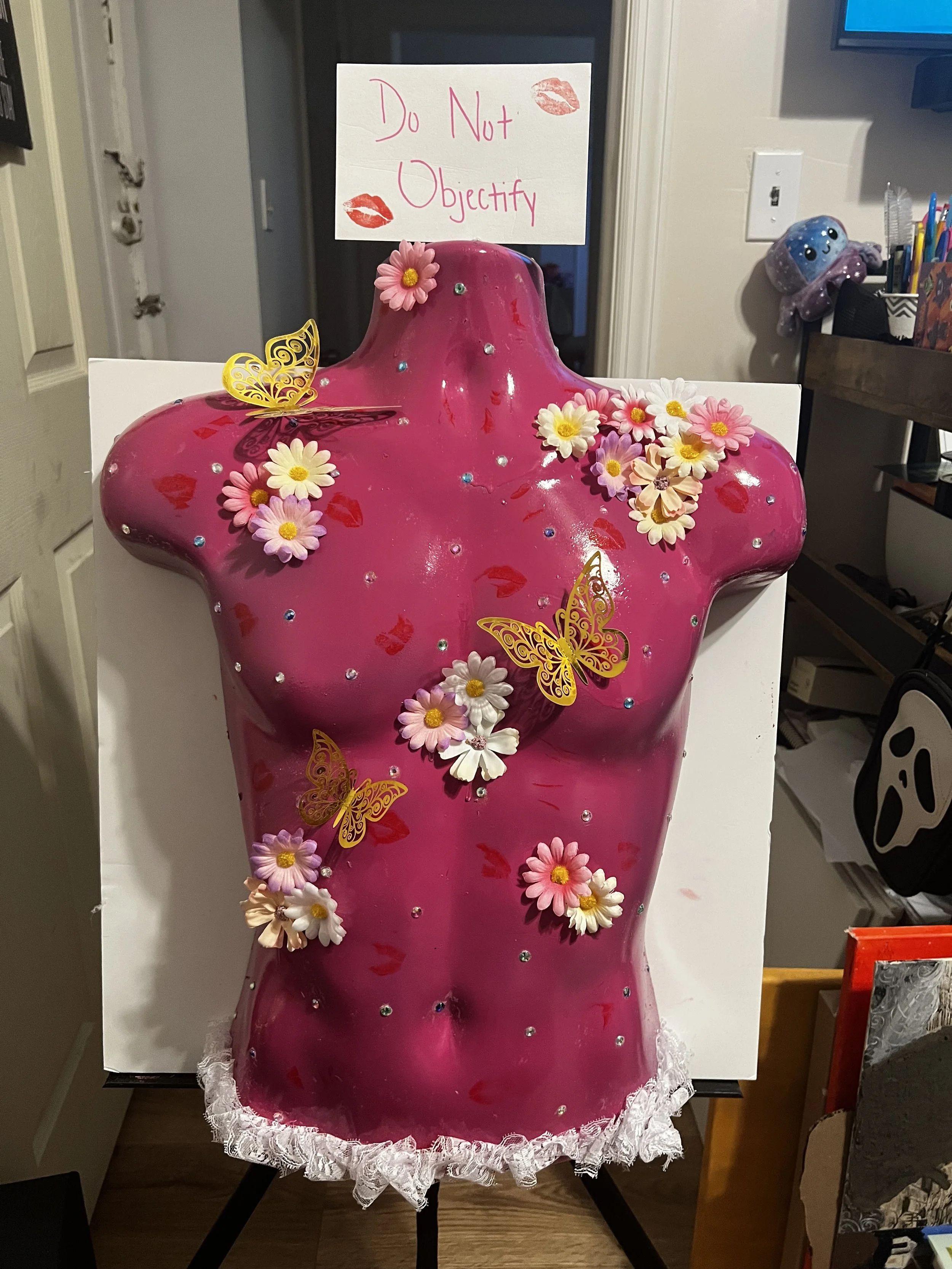
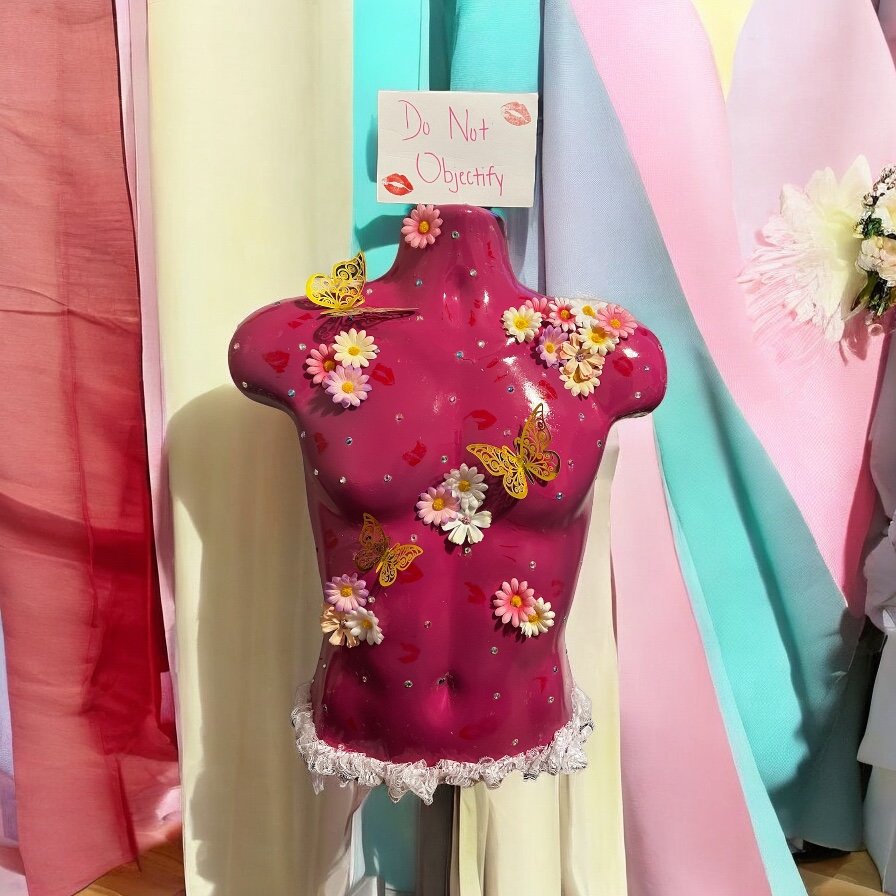
He Is the Object is my attempt to challenge the traditional gaze that has shaped art history for so long. Instead of positioning the female body as the automatic subject or spectacle, I place the male figure in that role, allowing him to be seen as soft, adorned, and vulnerable.
Through my choices in composition, styling, and perspective, I wanted to shift the power dynamic and ask what happens when a man becomes the one who is looked at. By presenting him in this way, I focus on masculinity as something nuanced rather than defined by strength or dominance.
Creating this piece helped me reflect on the gaze itself and the ways we decide which bodies are allowed to be observed, critiqued, or objectified. It encouraged me to consider how power moves between the viewer and the viewed. He Is the Object became a personal exploration of those dynamics, inviting others to rethink how representation shapes our understanding of identity, vulnerability, and control.
Drenched in Pink
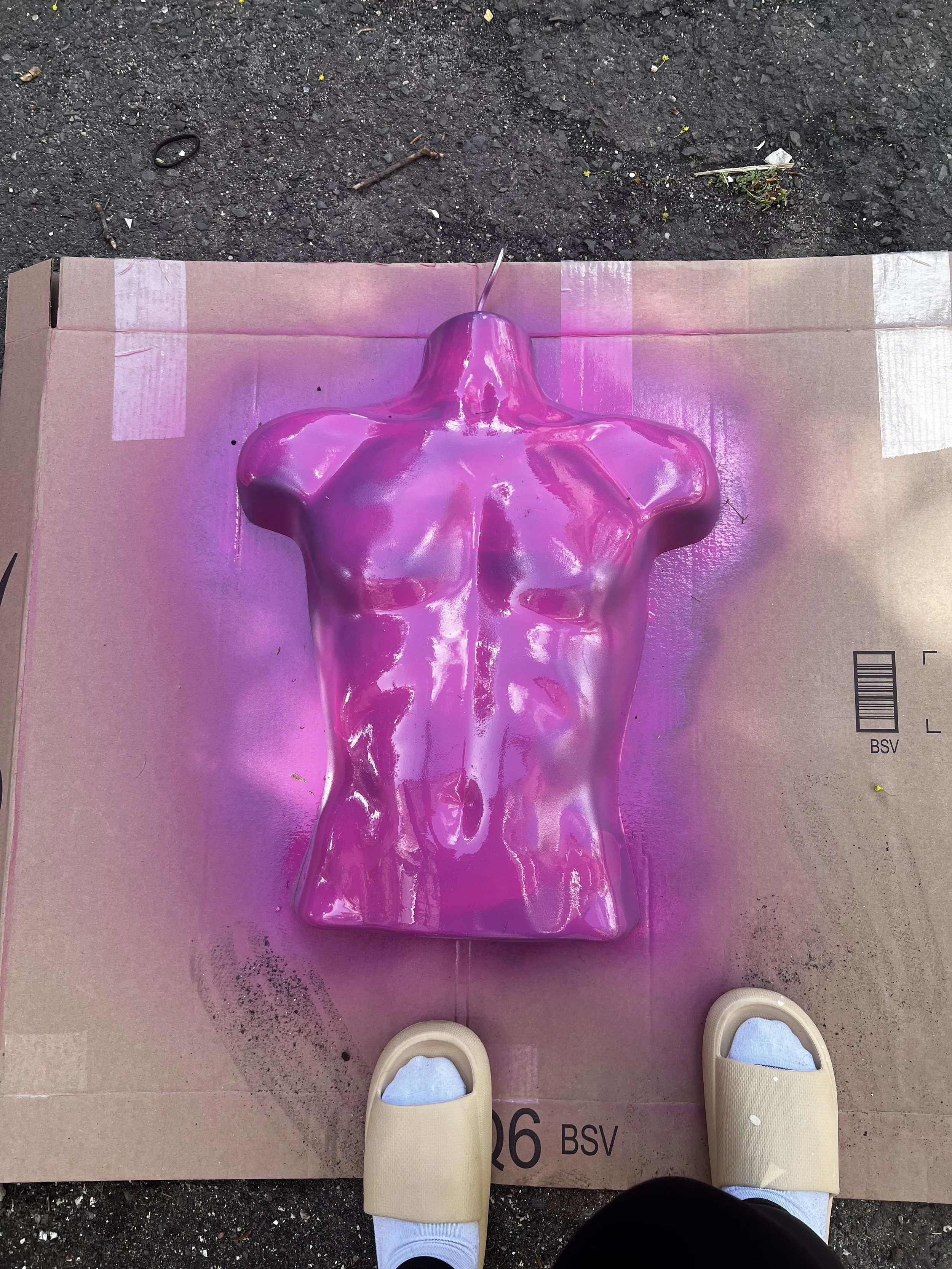
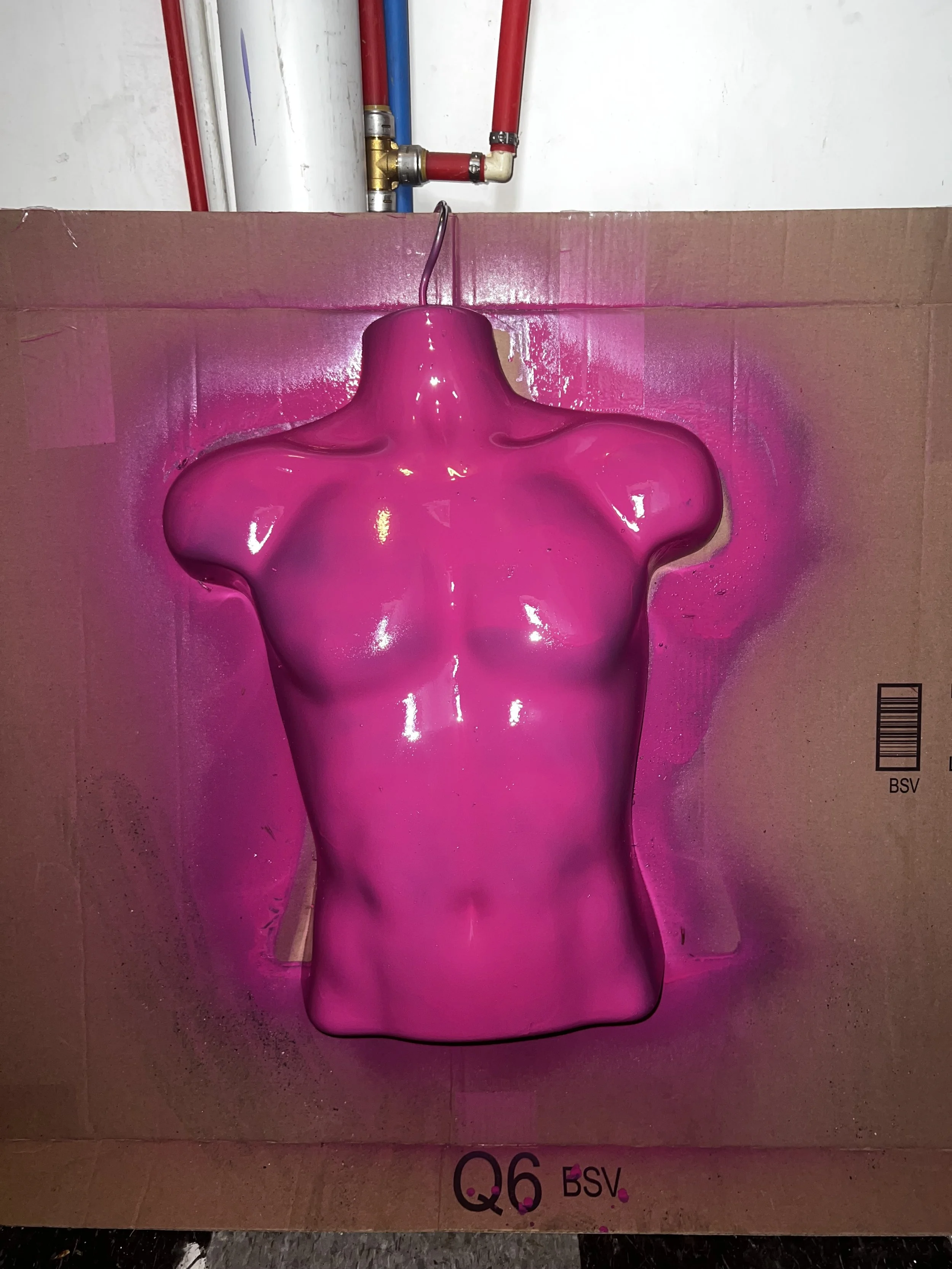
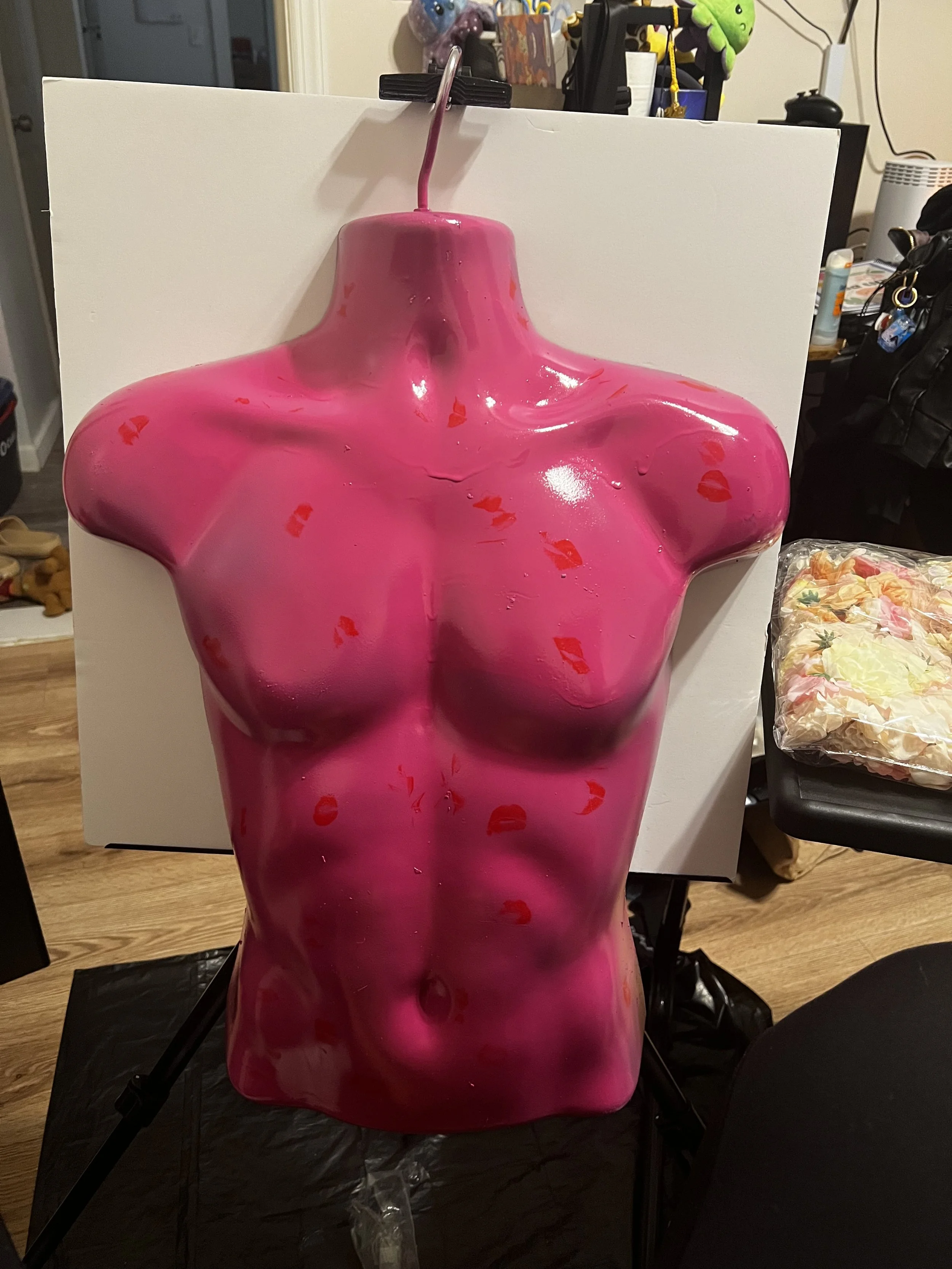
I began this piece with a plain male torso mannequin and chose a vibrant pink spray paint to challenge how we read the male body. Pink, a color often associated with softness or femininity, became an intentional choice to draw attention and shift expectation.
I applied multiple coats of pink spray paint, allowing each layer to deepen the color and create a glossy surface. As the paint settled into the contours of the torso, it highlighted the form and transformed it into something striking and impossible to overlook.
Through this process, the mannequin changed from a neutral object into a vivid and vulnerable presence, inviting viewers to reconsider how the male body can be seen.
Marking the Body
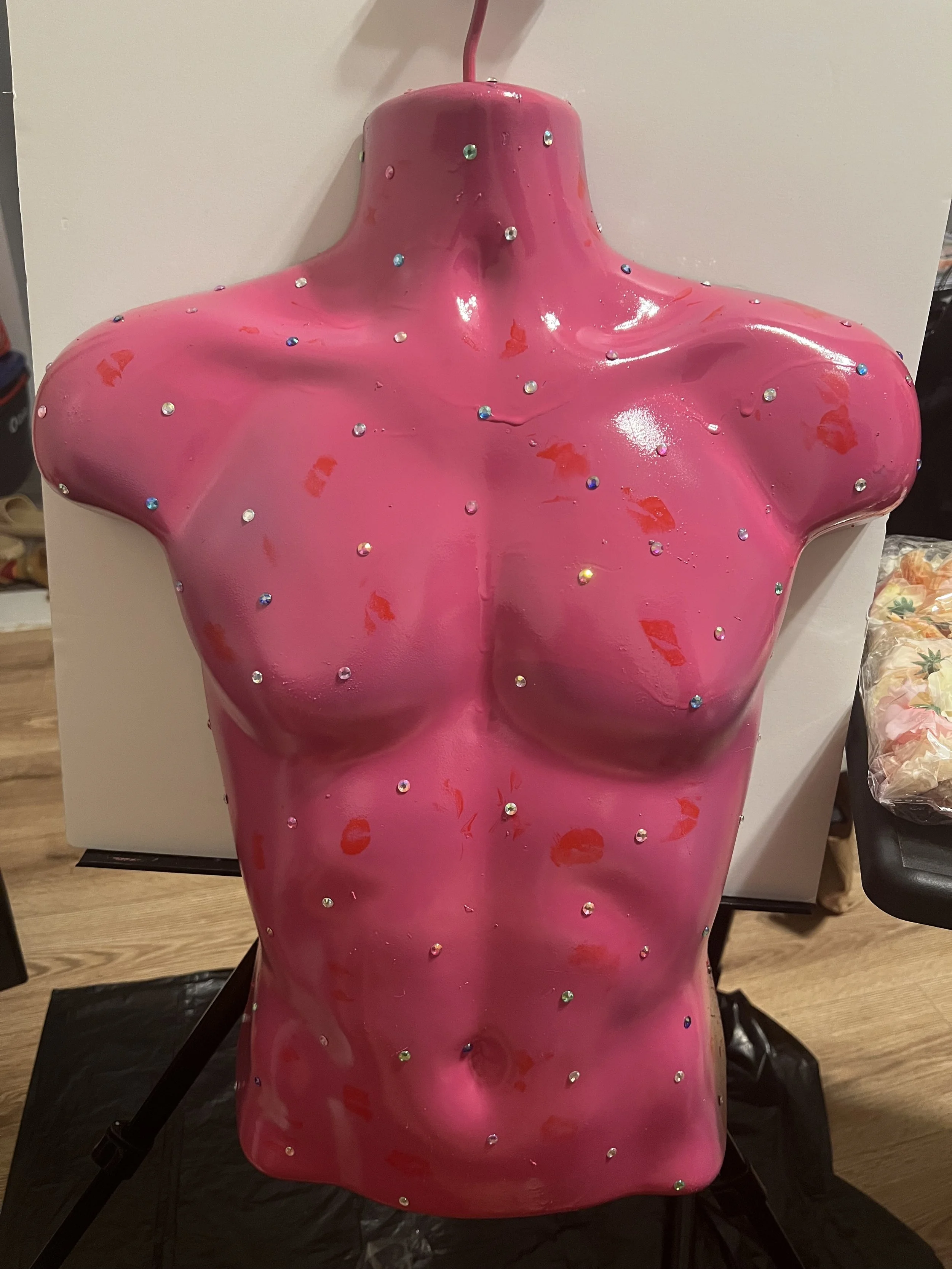
After the paint dried, I added kiss marks to show how women have often been treated as objects of desire and attention. I placed rhinestones across the torso to make the male body appear shiny and on display, echoing how women are often decorated and presented for the viewer’s pleasure.
These choices reference the male gaze, a concept that explains how visual culture positions women as bodies to be looked at and judged. By placing these symbols on a male torso, I reverse that dynamic and allow the male body to carry the scrutiny and vulnerability women have long experienced.
A Body in Bloom
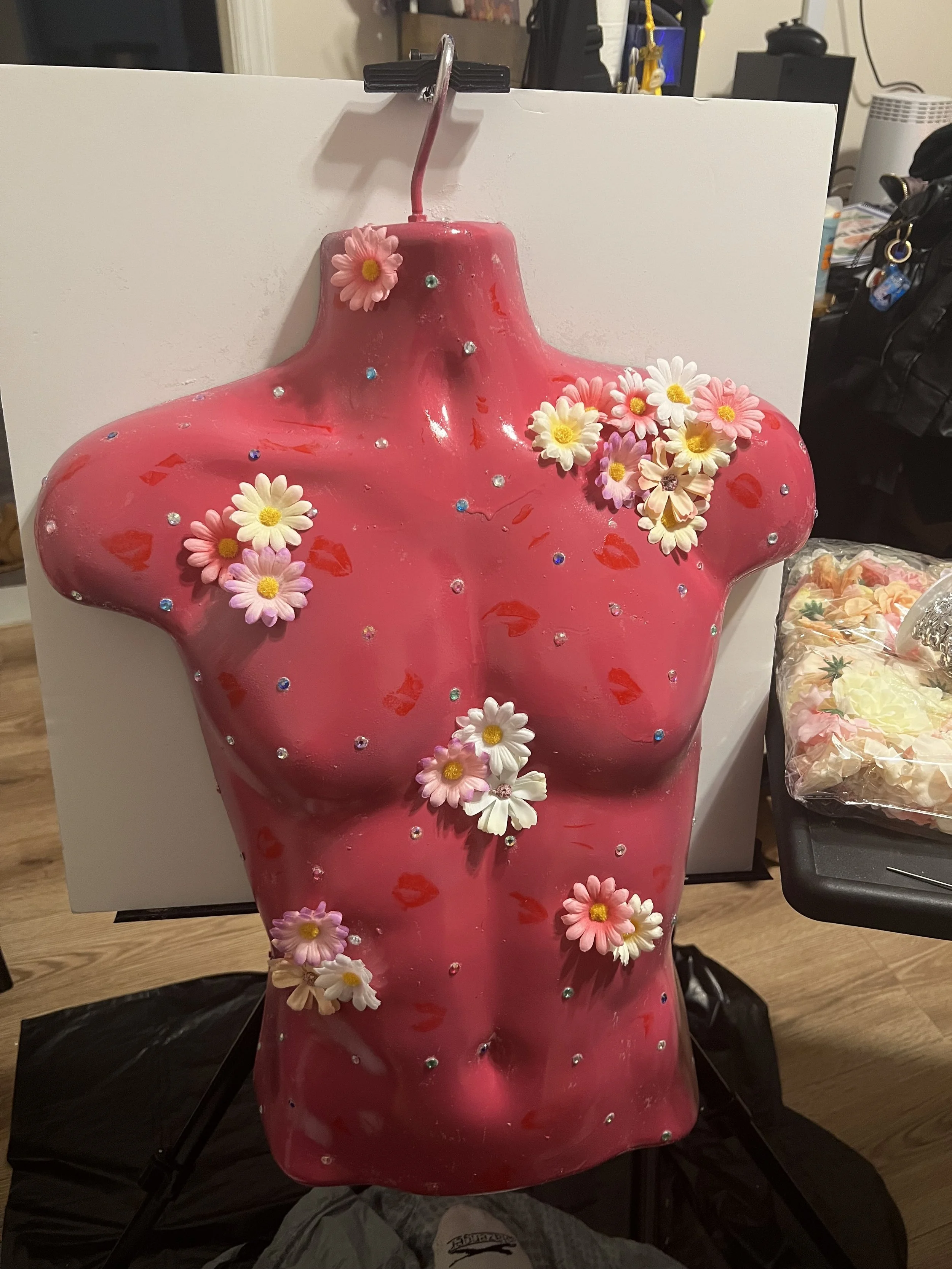
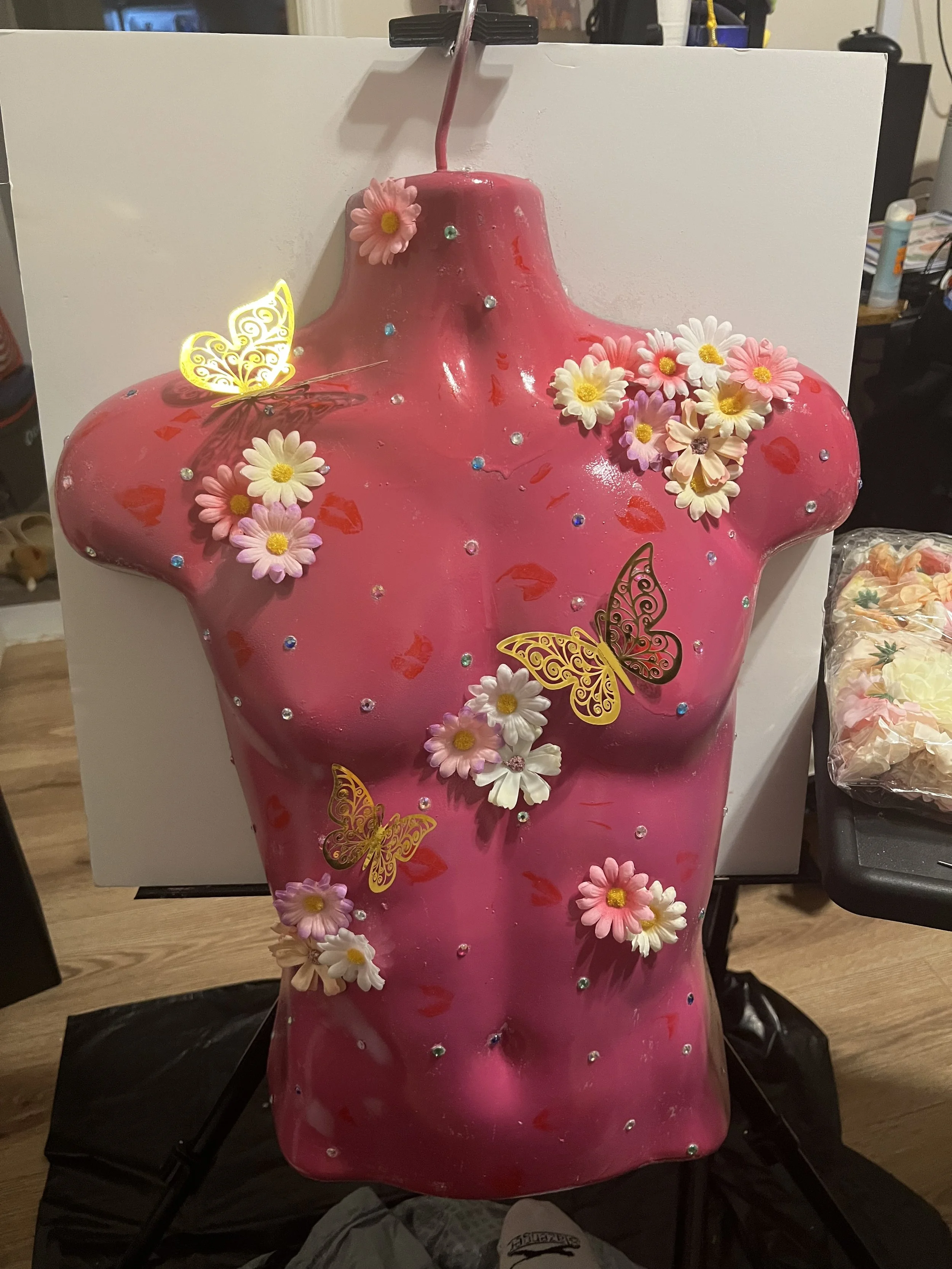
I finished this stage by adding dried floral assortments and butterfly decorations across the torso. The flowers introduce a sense of softness and care, qualities often assigned to women, and placing them on a male form challenges that expectation. The butterflies symbolize transformation and the ability to shift how a body is seen. Together, the flowers and butterflies soften the torso and turn it into something delicate and ornamental, further reversing the male gaze by showing the male body through symbols traditionally used to frame femininity.
Confronting the Viewer
I finished the piece by adding lace trim and placing a sign above the torso that reads Do Not Objectify, marked with kiss prints. The lace adds another layer of softness and references garments historically tied to femininity, further challenging who is expected to wear or embody delicacy. The sign serves as a direct confrontation to the viewer, mirroring the warnings women often wish they could give when their bodies are judged or consumed without consent. This final addition makes the message unmistakable, calling attention to the double standard within the male gaze and demanding accountability from whoever is looking.